Is Startup Visa Right for Me? Benefits and Challenges
As a startup founder or an entrepreneur, the idea of going global through a Startup Visa can feel both exciting and daunting. You may be wondering: Is this the right move for me? Can I handle the legal, financial, and cultural challenges ahead? Will I be able to build a strong network from scratch in an unfamiliar place? These are valid concerns and you’re not alone in facing them.
In this article, we’ll break down the real benefits and challenges of the Startup Visa, so you can decide with confidence if it’s the right path for you and your business.
Key Benefits of the Startup Visa
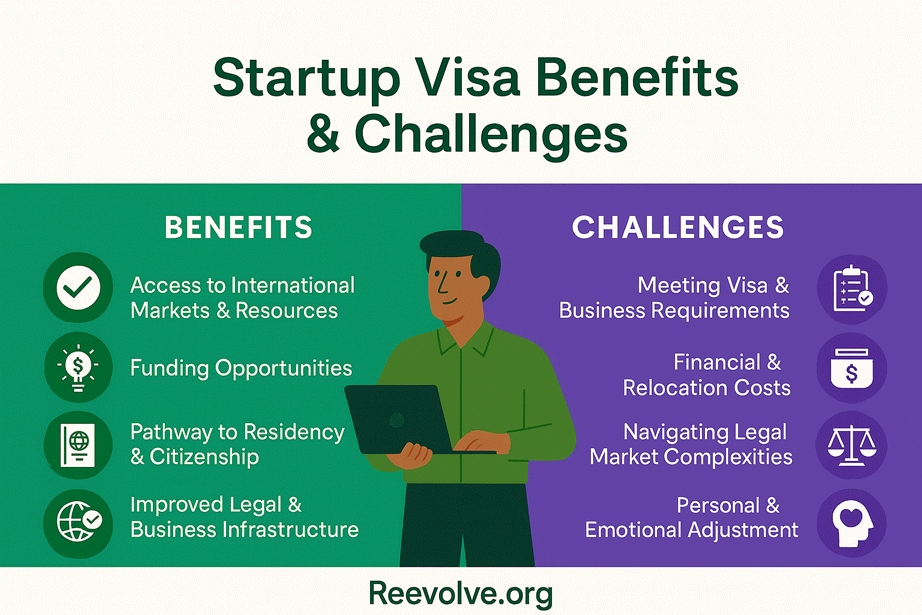
1. Access to International Markets and Resources
The Startup Visa helps you to access large and densely populated international markets, such as the European Union with over 450 million consumers, or the North American market with approximately 490 million potential customers.
Moreover, according to OECD reports, migrant-led startups supported by startup visa programs typically achieve 30% to 50% higher international sales compared to local startups. This figure reflects the significant impact of legal support, access to investment networks, and facilitated entry into global markets that these visa programs provide.
2.Funding Opportunities
In 2024, startups across Europe raised about $51 billion in funding, with a significant share going to startups supported by Startup Visa programs.
Investors tend to trust entrepreneurs who have received a Startup Visa because it shows that the startup has strong innovation and growth potential. Immigrant founders using Startup Visa programs usually get direct access to venture capitalists (VCs) and supportive innovation networks, which makes raising funds much easier.
3. Pathway to Residency and Citizenship
The Startup Visa pathway offers immigrant entrepreneurs a more direct, faster, validated, and supportive route to permanent residency and citizenship compared to other immigration channels such as traditional skilled worker visas, family sponsorships, temporary work permits, and student visas.
4. Improved Legal and Business Infrastructure
In countries with transparent legal systems and fast company registration processes, the average time to start a business is reduced by up to 50%, resulting in significant savings in both time and costs.
Additionally, intellectual property protection in these countries is very strong; for example, in Canada and the Netherlands, patent registration and intellectual property rights are typically completed within six months, reducing the risk of copying and loss of innovation.
5. Credibility and Global Trust
Having a registered company in a well-known and reputable country, especially in developed nations, makes international customers and investors more likely to trust you and take your business seriously.
Establishing your business in these countries serves as an official endorsement from the host government, indicating that your company meets required standards and is recognized as a legitimate and credible player in the global market.
Challenges You Should Consider
If you choose the startup visa path to internationalize your business, you must prepare for bureaucracy, financial risk, emotional pressure, and extreme adaptability. The general challenges you may face are as below:
1. Meeting Visa and Business Requirements
The major challenges for a startup visa include proving innovation, scalability, and getting approval from accelerators. By preparing a detailed and transparent business plan that clearly demonstrates growth and profitability potential, collaborating with reputable accelerators and experienced consultants, these obstacles can be turned into opportunities.
2. Financial and Relocation Costs
The visa application and legal fees, relocation expenses, business setup and registration fees can be significant. Additionally, settling into a new country involves personal costs, from housing to healthcare, which require careful budgeting.
3. Navigating Legal and Market Complexities
Entering a new market without proper preparation and knowledge may lead to legal issues or business inefficiencies. Every country has its own unique business regulations, tax laws, and cultural norms.
You have to research, consult with specialized lawyers and local advisors, participate in business events, and leverage local support networks. Also, being flexible and ready to adjust your business model based on market conditions and feedback is key to success.
4. Personal and Emotional Adjustment
Relocating internationally means adjusting to a new culture, language, and lifestyle. Balancing these personal changes with the demands of growing a startup requires resilience and flexibility.
If you’re interested in a startup visa, start by researching Startup Visa programs in your target countries. Reevolve specializes in helping entrepreneurs navigate the Startup Visa process, from assessing your eligibility to launching your business abroad.
Book a free session today to evaluate your eligibility and take the first step toward your international startup journey.